ICSE Class 10 Organic Chemistry — Mock Test (2027)
Free online mock test for Organic Chemistry (ICSE Class 10 Chemistry) — 20 competency-based questions based on the latest CISCE 2027 syllabus, with instant marking. Try the samples below, then take the full test free.
What to expect: This mock test covers key concepts from the Organic Chemistry chapter — including application-based and competency-focused questions aligned with how ICSE actually sets the paper.
Tip: Attempt without notes first to identify gaps, then review explanations for any wrong answers. Retake after a few days for best retention.
Sample questions
-
1.The formation of 1, 2-dibromo ethane from ethene and bromine is an example of
- A.Substitution
- B.Addition
- C.Dehydrohalogenation
- D.Dehydration
-
2.Ethanoic acid reacts with ethanol in presence of concentrated $\mathrm{H}_2\mathrm{SO}_4$, so as to form a Compound and water. The chemical reaction which takes place is called _______.
- A.dehydration
- B.hydrogenation
- C.esterification
-
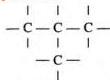
3.In the given diagram showing the substitution reaction of methane with chlorine, which labelled part represents the product formed when three hydrogen atoms in methane have been replaced by chlorine atoms?
- A.Chloromethane (CH₃Cl)
- B.Dichloromethane (CH₂Cl₂)
- C.Trichloromethane (CHCl₃)
- D.Tetrachloromethane (CCl₄)
-
4.Reaction of an alcohol with a carboxylic acid in the presence of concentrated H₂SO₄ is termed as:
- A.Halogenation
- B.Esterification
- C.Hydrogenation
- D.Dehydrohalogenation
-
5.Which of the following chemical equations correctly represents the reaction between ethyl alcohol and acetic acid?
- A.CH₃COOH + C₂H₅OH → CH₃COOC₂H₅ + H₂O
- B.CH₃COOH + C₂H₅OH ⇌ CH₃COOC₂H₅ + H₂O
- C.C₂H₅OH + CH₃COOH → C₂H₅COOH + CH₃OH
- D.CH₃COOH + C₂H₅OH → CH₃COC₂H₅ + H₂O₂
Ready? Take the full 20-question test free — instant marking, no sign-up needed.
▶ Start free mock test