ICSE Class 10 Light — Mock Test (2027)
Free online mock test for Light (ICSE Class 10 Physics) — 20 competency-based questions based on the latest CISCE 2027 syllabus, with instant marking. Try the samples below, then take the full test free.
What to expect: This mock test covers key concepts from the Light chapter — including application-based and competency-focused questions aligned with how ICSE actually sets the paper.
Tip: Attempt without notes first to identify gaps, then review explanations for any wrong answers. Retake after a few days for best retention.
Sample questions
-
1.Define the term angle of deviation in the context of light refraction through a prism.
- A.The angle between the incident ray and the refracted ray inside the prism.
- B.The angle between the direction of the incident ray and the emergent ray after refraction through a prism.
- C.The angle between the two refracting surfaces of the prism.
- D.The angle at which total internal reflection occurs inside the prism.
-
2.Which phenomenon of light causes the sky to appear blue?
- A.Reflection of light
- B.Refraction of light
- C.Scattering of light
- D.Dispersion of light
-
3.Name the waves given out by the two-dish shown in the figure:
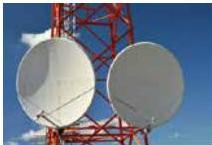
- A.Sound waves
- B.Light waves
- C.Microwaves
- D.Radio waves
-
4.How does the angle of deviation depend on the refracting angle of the prism?
- A.The angle of deviation increases as the refracting angle of the prism increases.
- B.The angle of deviation decreases as the refracting angle of the prism increases.
- C.The angle of deviation remains constant regardless of the refracting angle.
- D.The angle of deviation is inversely proportional to the refracting angle of the prism.
-
5.If a swimmer inside water looks at an aeroplane in the sky, then which of the following conditions are fulfilled?

- a.For the swimmer, the aeroplane will appear to be lower than it actually is
- b.For the pilot, the swimmer will appear to be at greater depth than it actually is
- c.For the swimmer, the aeroplane will appear to be higher than it actually is
- d.For the swimmer, the aeroplane will appear at its actual height
Ready? Take the full 20-question test free — instant marking, no sign-up needed.
▶ Start free mock test