ICSE Class 10 Similarity of Triangles — Mock Test (2027)
Free online mock test for Similarity of Triangles (ICSE Class 10 Mathematics) — 20 competency-based questions based on the latest CISCE 2027 syllabus, with instant marking. Try the samples below, then take the full test free.
What to expect: This mock test covers key concepts from the Similarity of Triangles chapter — including application-based and competency-focused questions aligned with how ICSE actually sets the paper.
Tip: Attempt without notes first to identify gaps, then review explanations for any wrong answers. Retake after a few days for best retention.
Sample questions
-
1.If $ABCD$ is a trapezium with $AB$ parallel to $DC$. Then the triangle similar to $\Delta AOB$ is:
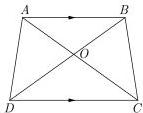
- a.$\Delta ADB$
- b.$\Delta ACB$
- c.$\Delta COD$
- d.$\Delta COB$
-
2.The areas of two similar triangles are $81\mathrm{cm}^2$ and $49\mathrm{cm}^2$ respectively. The ratio of their corresponding medians will be:
- A.$49:81$
- B.$81:49$
- C.$7:9$
- D.$9:7$
-
3.It is given that $\Delta ABC \sim \Delta PQR$ with $\frac{BC}{QR} = \frac{1}{4}$. Then $\frac{\operatorname{ar}(\Delta PRQ)}{\operatorname{ar}(\Delta BCA)}$ is equal to
- a.16
- b.3
- c.$\frac{1}{4}$
- d.$\frac{1}{16}$
-
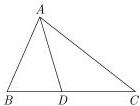
4.In the given diagram, $\triangle ABC \sim \triangle PQR$. If $AD$ and $PS$ are bisectors of $\angle BAC$ and $\angle QPR$ respectively then:
- a.$\triangle ABC \sim \triangle PQS$
- b.$\triangle ABD \sim \triangle PQS$
- c.$\triangle ABD \sim \triangle PSR$
- d.$\triangle ABC \sim \triangle PSR$
-
5.A model of a ship is made to a scale of 1:200. If the length of the model is 4 m, what is the length of the actual ship?
- A.800 m
- B.0.02 m
- C.80 m
- D.200 m
Ready? Take the full 20-question test free — instant marking, no sign-up needed.
▶ Start free mock test